Blog
Writing on conflict, intimacy, narcissism, and growing up in a marriage.
Where Narcissism Comes From, and How to Grow Out of It
Narcissism has four main components: Superiority (the belief that I'm better than everyone else) Indifference (a lack of concern for other people) Fragility (the inability to tolerate feedback or criticism)…

How to Solve Relationship Problems
Your brain has two modes: Problem Mode and Person Mode. In Problem Mode, you see your partner as a problem to be solved. In Person Mode, you see your partner as a person, someone who’s a lot like you. The Problem…

What Impact do you Have on your Partner?
When you have a relationship problem, your brain wants to focus on your partner's behavior, not on yours. It wants to think about your partner's impact on you, and it doesn't want to think about your impact on your…

Personal Power is the Foundation of Relationship Growth
A good relationship is full of compassion, caring, love and investment, but none of those things are the foundation of a good relationship. The foundation of a good relationship is a sense of personal power and…

What is Intimacy?
Intimacy is Into-Me-You-See. You can create intimacy in your relationship by revealing your true self to your partner without needing their validation. True intimacy requires self-acceptance, which is your ability to…

Your Partner is Hurting you on Purpose
If you crash your car three times a week, nobody's gonna call it an accident. But if you hurt your partner's feelings three times a week, people will call it an accident. Even therapists will talk about impact versus…

How to Heal a Narcissistic Relationship
Every relationship is narcissistic, and some relationships are more narcissistic than others. No matter how narcissistic your relationship is, your life will get better if you deal with the narcissism. This article…

How to find out who you really are
If you want to know who I am, ask my wife what it's like to be married to me. Ask her what it was like two years ago compared to what it's like today. If you want to know who you are, ask the person you're closest to…

How to Improve Communication in your Relationship
Here are three ways to improve communication in your relationship” 1. Say what you really think in the kindest way possible 2. Embrace disagreement and disapproval. 3. More silence than speaking. 1\. Say what you…

How to Handle the Pain of Infidelity
Your brain is mostly optimized to survive childhood, it's not really designed for adult relationships. Your partner occupies the place in your mind that is reserved for the person who's supposed to love you. And that…

Growth after Infidelity
The end of infidelity can mark the beginning of a much better relationship. I have seen hundreds of couples use infidelity as a way to rebuild their relationship into something much better than it was before. When…

Why does my therapist want to talk about my parents?
Your therapist wants to talk to you about your parents because your parents had a significant impact on how your brain developed. This article has three parts: 1. Your parents affected the way your brain developed 2.…

What is it Like to be Married to You?
Your brain wants you to focus on your partner's impact on you. It wants you to feel like your partner has to change for you to be okay. Your brain does this because it's optimized to survive childhood, not to thrive…

Personal Power is the Foundation of Good Relationships
When you don't feel like you're going to be okay, it's hard to be kind to your partner. Learning how to feel like you're going to be okay is the foundation of a good relationship. I call it a feeling of personal…

Relationships Drive Growth
Intimate relationships are the primary driver of human growth. You fall in love with someone, but eventually your feelings fade and the reality of who you are starts to take over your relationship. You start to feel…

How to not be like your parents
Your default programming is to make a fuss when you don't get what you want. That's how you stayed alive as an infant. When you were hungry, you made a fuss. When you were tired, you made a fuss. When you were…

Become a better partner if you want to have a better partner.
One of the biggest lies we're told in society is that the key to a good relationship is to find a better partner. The truth is that you will not be able to have a relationship with a better partner until you become a…
Is there ever a good reason to yell at your kids?
James: Is there ever a good reason to yell at your kids? : Maybe if they're actively running into traffic. James: That's exactly what I thought. If a child is about to run in front of a car, yelling can get their…
Take off the Mask in your Marriage
James Christensen & Catherine Roebuck James: There's a thing I tell clients who are trying to regain their partner's trust after cheating. One way to regain your partner's trust is to reveal things that are in your…
Trauma: a Conversation with Catherine Roebuck
A Conversation Between James Christensen and Catherine Roebuck March 30, 2026 James: The way I think about it is the more intense an experience is—well, maybe a better way to define it is the less capable I am of…
Don’t be a Doormat
When I want my wife to change, my brain reaches for the same tool every time: emphasize my distress. The logic feels airtight—if she could just see how much this hurts, she'd change. But think about what that…
What does Emotional Abuse look like?
Emotional abuse is intentional. When we hurt each other's feelings, we're usually doing it on purpose. If I crash my car three times a week, you’re not going to call it an accident. And if I hurt my wife's feelings…
What is Differentiation?
You've probably had the experience. Your partner says something — maybe it's a passing comment about how you loaded the dishwasher, or a heavier remark about your relationship with your mother — and suddenly you're…
Infidelity Statistics: How Common Is Cheating in Marriage? (2026 Research & Data)
Few topics in relationships generate as much anxiety, curiosity, and confusion as infidelity. Whether you're worried about your own marriage, recovering from betrayal, or simply trying to understand the landscape of…
Why Women Are Twice as Likely as Men to File for Divorce
Research consistently shows that women initiate approximately 70% of all divorces in the United States. When you narrow the focus to college-educated couples, that number climbs even higher. This isn't a new…
Divorce Statistics Every Couple Should Know in 2026
You've probably heard that half of all marriages end in divorce. It's one of those statistics people throw around at dinner parties like it's settled science. But is it true? And more importantly — if you're reading…
Do You Need a Therapist for Codependency?
You've probably heard the term "codependent" thrown around. Maybe someone called you that. Maybe you've started wondering if it applies to you. The word gets used loosely—sometimes as an insult, sometimes as a…
Building Bridges in Your Brain
When I was 15, my dad took my mom, my sister, and me out to his favorite fancy restaurant. My dad has a ton of social anxiety, and my role in the family was to be the class clown so that we could all relax a little…
A Comparison of David Schnarch's books Passionate Marriage and Intimacy & Desire
Passionate Marriage (1997) and Intimacy & Desire (2009) are David Schnarch's two most popular works. This article breaks down what each book offers and how they complement each other. Passionate Marriage introduces…
The Paradox of Self-Acceptance
My therapist says that respect is accepting a person exactly the way they are. If that is true, then self-respect means accepting myself exactly the way I am. When I consider that thought, a little red warning flag…
How to Stop Arguing: 10 Communication Tips That Actually Work
If you're searching for ways to stop arguing with your partner, you've probably already tried a few things that didn't work. Maybe you've tried talking more. Maybe you've tried talking less. Maybe you've tried…
How to rebuild your Relationship after Infidelity For the faithful partner: For the Unfaithful Partner:
For the faithful partner: 1. Accept reality 2. Focus on the present 3. Don't be mean 4. Don't control 5. Don't ask too many questions 6. Try to see your partner as an equal ⠀1. Accept Reality The first step to…
A therapist's Escape from Narcissism
About three years ago, I began to accept that I was unusually narcissistic. I say it that way on purpose because I don't like to use the term "you're a narcissist" or "you're not a narcissist." Realistically, it's…
The Love Trap
When you’re falling in love, you have intense feelings that make it easy to treat each other well. But when those feelings fade, you don't treat each other as well as you're used to. That's how you get caught in the…
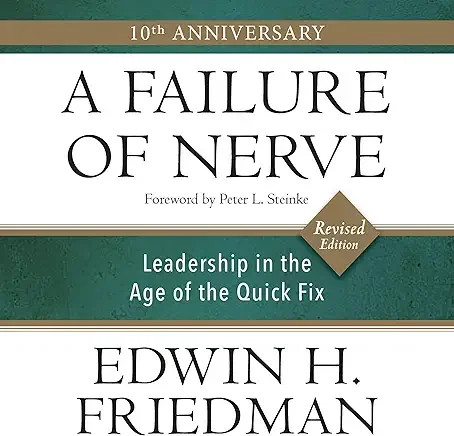
A Chapter-by-Chapter Guide to Edwin Friedman's "A Failure of Nerve"
Edwin Friedman, a rabbi and family therapist, spent decades watching leaders fail not because they lacked information or skills, but because they lacked the nerve to stand firm when everyone around them got anxious.…
A Couples Therapist Rates the Internet's Top Relationship Tips
These are ten common relationship tips you'll find online, rated from zero to ten. 1\. Know Your Partner's Love Language — 2/10 Gary Chapman's Five Love Languages (Words of Affirmation, Acts of Service, Receiving…

Adlerian Couples Therapy Triangles
I use two Adlerian Couples Therapy Triangles when I’m working with couples. The first one has three sides: that pad person poor me what will I do now The second one has two sides, the third side is blank: your impact…
Differentiation in Marriage
Falling in love is like two magnets pointed in the right direction—they tug toward each other effortlessly. But after a few years of marriage, it can feel like those magnets have flipped around. Now they're pushing…
Loving on Purpose
Childlike Love vs. Adult Love Children can love. But what children do is take warm, pleasant, affectionate feelings and do actions that align with those feelings. When a child feels good toward you, they act good…
How to become a more solid person
You build solidness by tolerating discomfort without falling apart. That's it. That's the whole game. Every time you stay present in a hard conversation instead of shutting down or blowing up—you get a little more…
How to Love a Difficult person How to Love a Difficult Person
How to Love a Difficult Person My wife and I would both qualify as people who are hard to love. We've been married for 24 years, and as you might expect, it's been difficult. But I've learned a few things along the…
Becoming a More Loving Person
The absolute lowest point of my marriage came a few years ago when I was having an emotional affair, and my wife asked me to stop. I said no. When I think back to that conversation now, the thing that stands out most…
What to Do When Your Wife Wants a Divorce
If your wife wants a divorce and you don't, this post is for you. There are three things you need to understand. First, she's probably right about you and wrong about herself. Second, you need to figure out her core…
A Conversation with Bruce Tift
Bruce Tift is the author of my favorite book, James Christensen: In reading your book, there are two splits you talk about. You talk about the internal split from the developmental view. There's an internal split…
How is Crucible Therapy Different?
Crucible therapy is different because Crucible training is different. Traditional therapy training focuses on learning techniques and procedures. Crucible training focuses on helping the therapist become a better…
Ten Tools for Relationship Communication
Slow Down If I start talking before my brain is finished thinking, I'm going to say things that will make things worse and not better. If I'm in an argument with my wife, my instinct is to start talking before she's…
Balance your Brain
The left and right halves of your brain are good at different things. The right side is good at understanding and appreciating people, while the left side is good at using things. There are also lots of other…
Crucible Therapy vs Gottman Therapy
Overview Crucible Approach (Schnarch): Rooted in differentiation theory (inspired by Murray Bowen), this approach views relationships as a testing ground for personal growth. Schnarch emphasizes individuality within…
Ellyn Bader’s Developmental Approach to Couples Therapy
Dr. Ellyn Bader is a clinical psychologist, educator, and a widely recognized expert in couples therapy. Along with her husband Dr. Peter Pearson, she co-founded The Couples Institute in California and co-created…
Bader, Schnarch, Real, Perel: Differentiation in Couples Therapy
This post covers the ideas of Terry Real, Ellyn Bader, David Schnarch, and Esther Perel – four experts who emphasize differentiation in their own unique way. All four agree that maintaining your individuality is…
Differentiation vs. Attachment in Couples Therapy
Couples therapists in the United States often find themselves navigating two major schools of thought: differentiation-based therapy and attachment-based therapy. These approaches offer contrasting philosophies on…
Differentiation-Based Couples Therapy
Understanding Differentiation in Couples Therapy In couples therapy, differentiation refers to each partner’s ability to maintain a solid sense of self while staying emotionally connected to one another. Rather than…
Your Relational Brain
The Map Versus the Mountain In "The Master and His Emissary," Iain McGilchrist reveals something profound about how our brains work. The left hemisphere is a specialized engine for narrow focus - categorizing…

Anxious/Avoidant Attachment in Relationships
Most relationships have an anxious/avoidant dynamic. The anxious partner responds to anxiety by seeking connection, while the avoidant partner responds to anxiety by seeking distance. These are two sides of the same…
Women’s Retreats Near Sacramento
Wellness & Renewal HER weekend (Healing, Empowerment, Release) The HER Weekend is a 2 1/2 day immersive, transformative and healing experience created for women ready to heal traumas and rediscover their power, their…
Men’s Retreats near Sacramento
1. An immersive 4-day retreat in old-growth redwoods, combining breathwork, meditation, hiking, and fire rituals. Ideal for emotional healing and authentic masculinity work. Duration: 4 days Cost: $800–$1,000 2. A…
Your Relational Brain
Your relational brain is the part of your brain that is designed to help you have healthy relationships with other people. When your relational brain is online, you care about your partner, and you also care about…
Right Mind Relationships
The two halves of the human brain are physically separate from each other, except for a connecting organ that is about one inch in diameter. Each half responds to the world in its own way: Right mind Sustained…
Common Relationship Dynamics
Relationships are full of self-reinforcing dynamics. Each partner shows up in a way that makes it easy for the other to show up in the complementary way. You get to choose how far you move into each dynamic. When you…
Parental Blindness
A child’s brain has a safety filter that prevents the child from clearly seeing the worst things the parents parents are doing We still learn to replicate those things, but we remain blind to them unless we do…
Why do we Create False Realities?
We use false realities to justify bad behavior, intense feelings, and lack of action. We create false realities when we don’t want to face what’s actually true about ourselves. After creating a false reality, we…
Creating False Realities to Justify Intense Emotions
When you experience intense emotions, you might find yourself creating a false reality to justify that emotion. For example: A child who feel afraid at night might imagine a monster under the bed. The imaginary…
David Schnarch’s Crucible Approach vs Terry Real’s Relational Life Therapy (RLT)
Schnarch’s Crucible Approach is rooted in differentiation theory, inspired by Murray Bowen, and frames relationships as a “crucible”—a transformative space where personal growth occurs through the tension of…
A Complete List of Dr. David Schnarch’s Books
Dr. David Schnarch published five books while he was alive, and his last manuscript was released as a free PDF download after he died. Here are his books, listed in reverse chronological order, with the free PDF…
Schnarch Crucible Therapy vs Emotionally Focused Couples Therapy
Emotionally Focused Couples Therapy (also known as EFT or EFCT) is one of the most popular modalities for couples therapy in the United States. David Schnarch’s Crucible Therapy is not nearly as well-known. As a…
Differentiation in Crucible Therapy
Differentiation is the ability to remain true to yourself and connected to your partner at the same time. It’s what allows you to have both freedom and connection. Differentiation is not about becoming an island,…
Traumatic Mind Mapping in Crucible Therapy
Traumatic Mind Mapping You have an innate ability to understand what’s happening in other people’s minds, what Dr. David Schnarch called mind mapping. You use it to navigate social situations, build relationships,…
Mind Mapping in Crucible Therapy
Mind mapping is your brain's ability to create a mental picture of what's going on in someone else's mind. It's like you're building a map of their thoughts, feelings, motivations, knowledge, and beliefs. You use…
Couples Counseling: Gottman vs EFT
Here are the main differences between Gottman and EFT, the two most popular approaches to couples counseling in the United States: What They Focus On Gottman: Works on changing harmful communication patterns and…
What to expect from Gottman Couples Counseling
Here's what you can expect from Gottman Couples Counseling: Gottman Relationship Therapy starts with a "getting to know you" phase. First, you and your partner will meet with your therapist together to talk openly…
The Myth of Parental Innocence
When you were young, your brain was hard-wired to seek connection and care from an adult. For most of us, it was one or both of our parents. As you grew, your brain learned a lot from your parents, or whoever it was…
David Schnarch on Revisualization
Revisualizations are a core technique in David Schnarch’s Crucible Neurobiological Therapy aimed at resolving steady-state regressions—that persistent state of emotional reactivity that keeps you stuck. It involves…
David Schnarch on Written Mental Dialogues
Written mental dialogues are a key technique in David Schnarch’s Crucible Neurobiological Therapy (CNT). Imagine writing a conversation resembling a play script where you engage in a back-and-forth with a person who…
What is Normal Marital Sadism?
Normal marital sadism (NMS) is the emotional torture partners inflict on each other within a marriage. It is a common occurrence in marriage and often plays out in a couple's sex life. It can involve saying hurtful…
8 Ways to Improve Relationship Communication
1\. Hit the Pause Button (10 Seconds or 10 Minutes) Before reacting to your partner, take a beat. There's magic in a well-timed pause. I like to think of two types: The 10-Second Pause: This is your quick breather.…
Eyes-Open Sex
Eyes-open sex is a pathway to deeper intimacy and connection with your partner. It involves looking into your partner's eyes and allowing them to truly see you, not just your physical body, but also your emotional…
How Higher-Desire Partners Contribute to Sexual Problems
When a couple struggles with differing levels of sexual desire, it’s easy to assume that the partner with a lower desire (LDP) is solely responsible for the issue. However, the partner with higher desire (HDP)…
Healing from Sexual Abuse
Growing up in a family where sexual abuse occurs can be more damaging than the abuse itself due to several factors: Traumatic Mind Mapping: Children in these families are constantly trying to understand the minds of…
Collaborative, Collusive, and Combative Alliances in Marriage
A collaborative alliance is an agreement between two people to work together toward a common goal, even when it’s hard. It’s about bringing out the best in each other and acting like a true partnership. The “golden…
How can I Offer a Collaborative Alliance to my Partner?
While a collaborative alliance ideally involves both partners, it's possible for one person to make the first move, even if their partner isn't initially receptive. This is because responsibility in a collaborative…
Differences in Sexual Desire are Good, Actually.
Differences in sexual desire can help relationships grow because they push couples to develop their independence and manage their own anxieties. This is called differentiation, and it’s key to maintaining intimacy…
Why the Lower-Desire Partner Always Controls Sex
The fact that the lower-desire partner (LDP) has control over sex in a relationship might seem unfair or counterintuitive, but it's a natural consequence of the dynamics of desire. Here's why the LDP holds the reins:…
What is a Two-Choice Dilemma
Dr. David Schnarch often talked about “Two-Choice Dilemmas.” A two-choice dilemma arises when you're stuck between two options, both of which present anxieties or negative consequences. It's the feeling of wanting…
What is Normal Marital Sadism?
Normal marital sadism (NMS) is a term coined by Dr. David Schnarch to describe the subtle but cruel ways partners can hurt each other emotionally in a marriage. It's a common problem, often hidden because our society…
What is Traumatic Mind Mapping?
Traumatic mind mapping occurs when you're trying to understand someone else's thoughts and feelings, and what you perceive is so disturbing that it negatively impacts your own mind and brain. It's a type of mental…
Overfunctioning and Underfunctioning
Overfunctioning and underfunctioning are patterns of behavior that can mess up the balance in your relationship. One partner ends up doing way too much (overfunctioning), while the other doesn't do enough…
Dr. David Schnarch on Mind Mapping
Dr. Schnarch defines mind mapping as the ability to understand another person's mind and predict their behavior. This involves stepping into their perspective and understanding their motivations, even if they differ…
7 Things I learned from Dr. David Schnarch
Dr. David Schnarch created Crucible Therapy and is one of my heroes. His writing has helped me save my own marriage, and help other couples do the same. 1. Nobody's ready for marriage; marriage makes you ready for…
Why Crucible Therapy is Better than Gottman Relationship Therapy
David Schnarch created Crucible therapy as a comprehensive approach to helping married couples with both relationship and sexual issues. At its core is the idea of "differentiation" - keeping your own identity and…
Dr. David Schnarch and Crucible Therapy
When Dr. David Schnarch created the Crucible Approach and was a leader in combining sexual and marital therapy. Instead of focusing on communication and solving conflicts, he emphasized differentiation: the ability…
Collaborative Parenting
1\. Children Learn From What You Do, Not What You Say Children learn from what I do, not from what I say. As adults, we have more capacity to learn from what people say to us. Children mostly just learn through…
David Schnarch’s Best Books
Here is a list of my favorite David Schnarch books: 1\. What the book is about: If you’ve ever felt overwhelmed by your emotions, like you’re sinking and can’t come up for air, this book is for you. Schnarch explains…
What is a Collaborative Alliance?
Creating a more collaborative alliance is the key to relationship repair. Dr. David Schnarch lists these eight key points about collaborative alliances in Chapter 11 of his book Intimacy and Desire: 1\. First and…
How Relationships Work
How Relationship Therapy Works Relationship therapy helps you answer three questions: What is going on in your relationship? Why is it happening? How can you make it better? Every relationship goes through difficult…
Anger, Frustration, and Resentment
Anger, resentment, and frustration are all the same thing. I’m going to use the word anger here, but feel free to replace it with frustration or resentment if that’s what you usually call it. Anger is your body’s…
Living at the Bottom of the Ocean
Close your eyes and imagine the coral reef scene from “Finding Nemo.” Picture the fish flitting about, the sun filtering down through the waves, and the bright colors everywhere. Now, picture the very different scene…
The Victim Triangle
describes three roles we take on in challenging situations: 1\. Victim Feels oppressed and powerless, can’t solve problems or make decisions Seeks help from rescuers but resists solutions Derives sense of self from…
There’s no Need to Defend Yourself.
One of the first things I talk to couples about when they come into my office for marriage therapy is that you don't need to defend yourself when your partner criticizes you. Why? Because you don't actually need your…
Are you Living in Emotional Poverty?
Every family exists somewhere on a spectrum of financial poverty to extreme wealth. There is a similar spectrum for emotional wealth in families. Like most therapists, I was born into emotional poverty, and have…
David Schnarch’s Four Points of Balance
Dr. David Schnarch's Four Points of Balance describe four quadrants of emotional wealth and independence: You can read more about the four points of balance in Dr. Schnarch’s book Intimacy and Desire. 1. Solid…
How to Handle Relationship Distress
Your Child Brain Your brain is programmed for survival. When you were young, survival meant maintaining a close, emotional connection to your parents or caregivers. You were mostly helpless on your own, so your brain…
Crucible Therapy vs Gottman Therapy
Gottman Therapy: The Traditional Approach The Gottman Method, developed by Dr. John Gottman and Dr. Julie Gottman, is what most people expect from couples therapy. It's based on extensive research, observing…
Crucible Therapy vs Emotionally-Focused Therapy (EFT)
This article compares Dr. David Schnarch's Crucible Therapy with Dr. Sue Johnson's Emotionally Focused Therapy (EFT). While both aim to improve relationships, they differ significantly in their core philosophies and…
How Crucible Counseling Works
David Schnarch’s Crucible Therapy for couples is much less popular than the Gottman Method or Sue Johnson’s Emotionally Focused Therapy. Schnarch’s approach to treating couples requires the therapist to go through a…
Dr. David Schnarch’s Approach to Improving Sexual Relationships
Dr. David Schnarch, a renowned psychologist and sex therapist, spent decades challenging this conventional wisdom on how to improve committed sexual relationships. His approach, outlined in books like "Passionate…
How Couples Counseling Works
Here’s what you can expect in your first couples counseling session: after a few minutes of state-mandated disclosures, we will dive right into what needs to change in your relationship. You will each tell me what…
Why Marriage is So Hard
Marriage exists at the edge of human capability. No one is born ready to create a happy, thriving marriage; we have to develop that capacity. It’s like playing the piano or climbing a mountain or ballroom dancing:…
How to Raise a Narcissist in Four Easy Steps
Do you want your kid to be president? Start by helping them develop these nine narcissistic traits: 1. A grandiose sense of self-importance 2. Preoccupation with fantasies of success, power, brilliance, beauty, or…
Sex, Money, Parenting, and the In-Laws
These are the four that tear couples apart: 1\. Sex 2\. Money 3\. Parenting 4\. The in-laws The first three are all issues where compromise is difficult, and where each partner has a lot of power to affect the other…
Why You Can’t Stop Arguing
Close your eyes and imagine the wildlife that surrounds a coral reef in tropical waters. Shimmering fish swim in schools, darting in and out as the gentle currents move plants and animals in a delicate dance, bathed…
The 80/20 Rule
80% of the distress you experience in your adult relationship is an emotional flashback to childhood. The human brain is more optimized for survival in childhood than thriving in adult relationships. In childhood,…
How to Calm your Inner Critic
Everyone has an inner critic, that voice in your head that says you’re just not good enough, you need to try harder, focus more, and get more done. We learn to talk to ourselves this way in inner adolescence, when…
The 50/50 Principle
I’ve worked with hundreds of couples and I have yet to meet a couple where one person was a lot more mature than the other. As a general rule, we tend to be romantically attracted to people who are at least as…
Relationship Therapy is like Dance Class
My wife and I take dance lessons together. The goal of every lesson is to dance a little bit better than we did at the beginning of the lesson. When we go to marriage therapy together, the goal is the same: to dance…
10 Principles for Making Marriage Work
Physical Safety If there is any ongoing threat of physical violence in your intimate relationship, you will be hard-pressed to step into the kind of collaborative conflict that is necessary to help the relationship…
Crucible Relationship Therapy
Overview Developed Dr. David Schnarch, Crucible Neurobiological Therapy helps couples overcome the most difficult relationship challenges. Crucible therapy focuses developing each person’s capacity to love and value…
4 Steps to Better Relationship Communication
Step one: calm down Anxiety kills relationship communication. When you're anxious, you can't calm down enough to listen to what your partner's saying, because you're too busy thinking about what you want to say next.…
Four Steps to a Better Relationship
Step One: Your Partner Is Not the Source of Your Distress When you feel abandoned or overwhelmed, you might blame your partner for these feelings and the physical sensations that accompany them. In reality, this…
Exercises for Couples
Touch 1. One partner is the giver and the other is the receiver. We will switch roles after few minutes. 2. When I am the giver: take a deep breath and allow my body to settle down. Search my soul for the love I…
Family Card Games
I often encourage parents to play card games with their children. Some of my favorites are and I especially like games that don’t take a long time to play, involve bluffing, and have lots of opportunities for…
Focusing on the Physical World
When I’m anxious, I tend to get sucked into imaginary worlds. I might start thinking about what my wife is feeling, or what some other person thinks of me. None of these things are very real, they are just creations…
Rebuilding Relationship Trust
It’s not easy to rebuild trust in a relationship once it’s been lost. The following is a practical guide to rebuilding trust when your partner has betrayed you in some way. Accept your new reality You can’t plot your…
The Childhood Survival Bond
We learn about human relationships in childhood When we were children, we were vulnerable to being abandoned or overwhelmed. We regulated our emotional state by trying to increase connection with our parents if we…
Somatic Acceptance
Somatic acceptance is the practice of noticing, accepting, and feeling kindness toward the unpleasant physical sensations that accompany intense emotions. By noticing the physical component of intense emotions, we…
Writing for Mental Health
During an intense, frightening, or dangerous experience, the brain shuts off higher-level thinking in favor of low-level survival protocols. After the event is past, there is an opportunity to reprocess what happened…
Breathing for Mental Health
The way we breathe changes the way we feel. Each of these exercises can help you feel less fear, sadness, and anxiety. General recommendations You can’t fill your lungs if you’re hunched over. Sit up straight or lie…
Escaping the Anxious/Avoidant Trap
"We are never so defenseless against suffering as when we love." — Sigmund Freud Defining the Trap Most marriages incorporate a dynamic where one partner tries to soothe anxiety by seeking emotional and physical…
Why Do We Fall in Love with Abusive Partners?
A child’s brain A child’s brain is predisposed to perceive her parents as trustworthy and good, even when they aren’t. This mind-twisting persists into adulthood, making it hard to perceive cruelty in potential…
Exercises for Calmer Connection
This is a guest post by relationship coach . These three exercises, developed by sex and relationship therapist Dr. David Schnarch, are designed to help you learn to be physically and emotionally close to your…
What I wish I Knew Before Marriage
You’re trying to manage the minds of lots of people, for you to be okay. And that’s a thankless job. It’s exhausting. - Jennifer Finlayson-Fife Resentful Accommodation is neither kind or loving I entered my marriage…
Parenting Without Emotional Punishment
“So much is asked of parents, and so little is given.” –Virginia Satir Emotional Punishment is the default Most parents use emotional punishment to control their children. The implicit contract is this: if you don’t…
Three Things I learned from Bruce Tift
Bruce Tift’s book changed the way I think about life, love, and therapy. Bruce describes two paths to learning how to feel free in life: the path of Western therapy, and the path of Buddhist philosophy. Bruce talks…

Break Free from Emotional Manipulation
Infants use intense emotional expression (crying) to get their needs met. As adults we often resort to the same strategy: using emotional intensity to manipulate others. This behavior is instinctive and hard to grow…
How to Tell your Partner what you Want
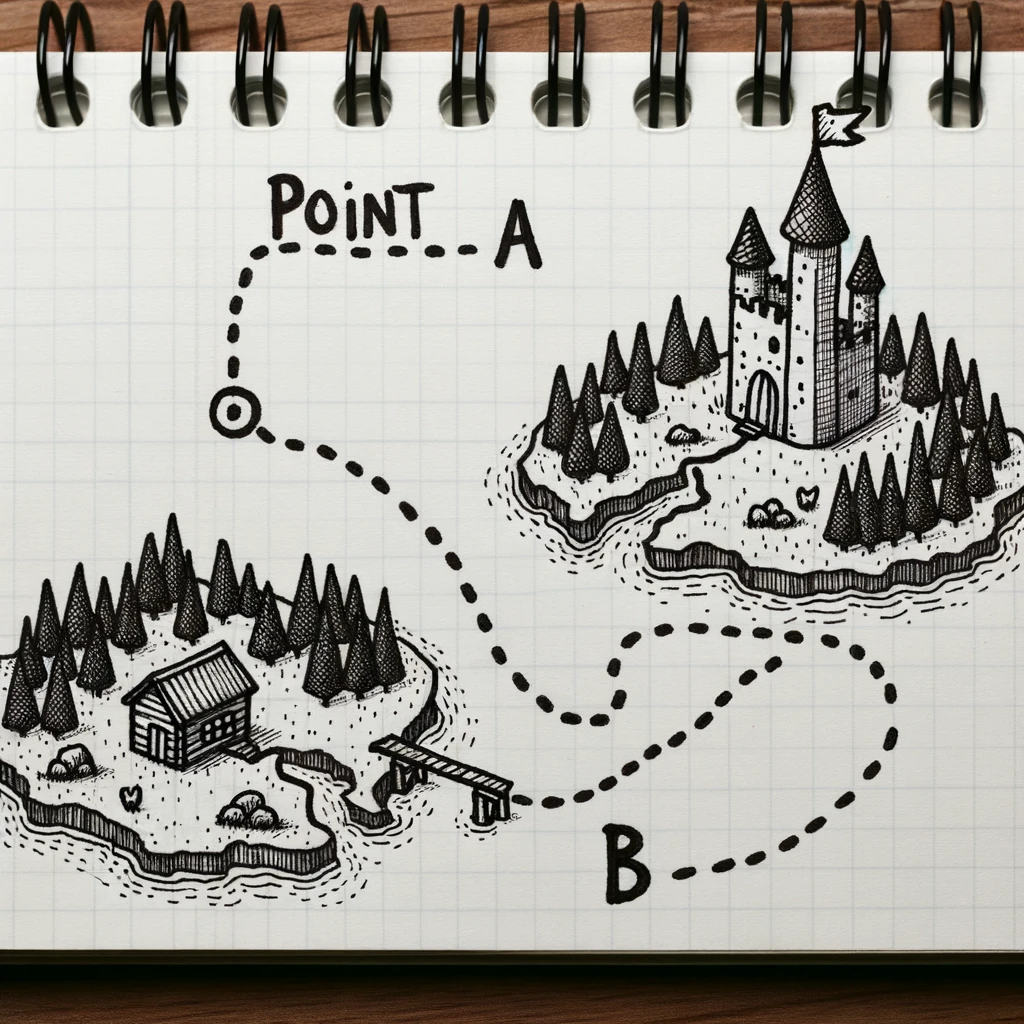
Most relationship arguments are about differences in preference and perception. If perception is Point A (where I am, where you are, where we are) then preference is Point B (where I want to be, where I want you to…
Healthy Relationship Conflict
7 examples of healthy relationship conflict Healthy conflict is good for relationships, and most relationships actually need more conflict, not less. We avoid conflict because we are afraid of upsetting each other,…
What Drives Low Self-Esteem?
Reason 1: because you’re human We live in a culture that expects everyone to have “healthy self-esteem,” but in reality, self-esteem (or self-respect, as I prefer to call it) is something we develop, not something…

Why you partner might not want sex
Reason 1: you’re in a committed relationship. It really is normal to have a higher-desire partner (HDP) and a lower-desire partner (LDP) in a committed sexual relationship. You’re probably the HDP, and you probably…

How to Reduce Relationship Anxiety
Popular culture teaches us that relationships are for comfort and pleasure. Real life disagrees. Most committed relationships are full of anxiety. As humans, we have a deep desire to form long-term relationships, but…